


Vampires were not originally sexy. They were disgusting, intimate violations.
The whole sex appeal thing is a modern invention! You can blame Twilight if you want.
Now, their violence feels consensual. Or at least, it performs consent.
They don’t just go for it—they hesitate and hover close enough for refusal to remain possible. Close enough that you could step back, technically. But close enough that you don’t. You with me?
That space between skin and teeth is doing all the work. The distance matters because it creates the illusion that nothing will happen unless it is permitted.
In such accounts, their hunger seems like something they restrain and suffer under, almost nobly, rather than something they impose. This restraint turns violence into tension, and it becomes a question instead of an act forced upon you.
This is what makes it seductive. Not just the biting of necks, though that helps.
(Watch Interview With the Vampire. ughh.)
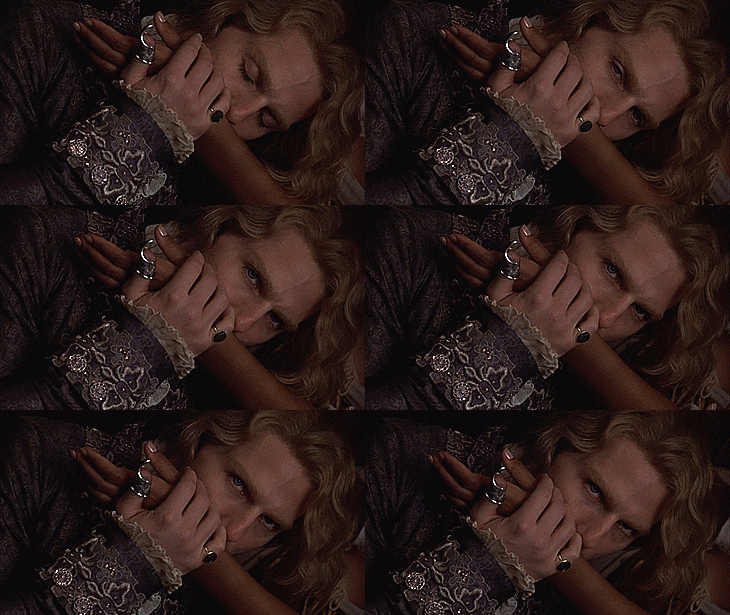
But vampires weren’t always like this !!
Before they were beautiful, they were wrong.
Before they waited to be invited in, they forced their way back into homes that had already buried them.
The original vampire was the Strigoi.
The Strigoi was not a charming immortal or a tragic romantic figure, but rather a dead person who rose from the grave and came back to finish what death had interrupted.
It would return to its house, sit at the table, and visit its spouse, children, and parents. And slowly, they would begin to weaken.
Illness spreading through a family was seen as evidence of a return instead of a coincidence. (They believed it was the dead, feeding.)
So they did what they believed was necessary, of course. They drove a stake through the heart of the corpse! They’d cut it open and burn it—not out of cruelty, but out of protection.
The vampire was not someone you desired, but someone you loved.
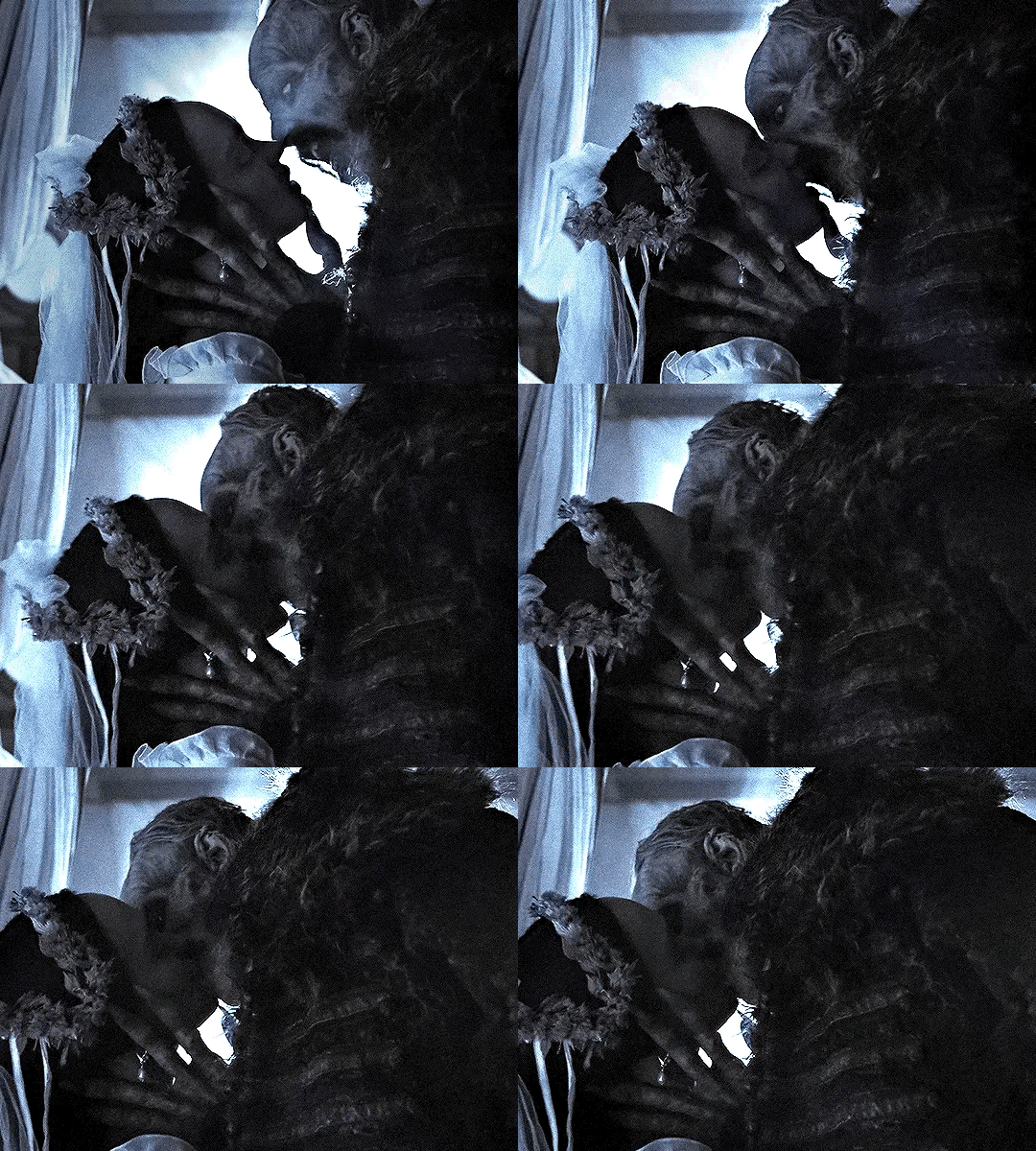
We made vampires sexy because we wanted to control fear. Sexualizing something makes it feel voluntary since it makes it seem like that violation is actually participation.
The Strigoi was practically an invasion. It returned without invitation, fed because it needed to, not because it chose you.
My point is: vampires like Lestat de Lioncourt do not descend on entire families like a disease. They single someone out, learn them, speak to them. They offer immortality not as a curse, but as a gift.
Even when the choice is manipulated, it is still presented as a choice.
Others, like Count Orlok in Nosferatu, are still invasive, but even he is drawn to one person above all others. His hunger is not random, more like a fixation.
That fixation changes everything!
To be consumed by something mindless is horror. To be consumed by something that sees you, follows you, and chooses you feels more intimate. I mean, who doesn’t love attention?
Fear, then, feels seductive.
Because there is something deeply unsettling, and deeply compelling, about being wanted by something that does not need you, but wants you anyway.
If destruction comes with eye contact, we call it romance.
The danger never disappeared, we just started mistaking attention for affection! Sound familiar? haha.
The original vampire was proof you were not safe, even in love.
The modern vampire is proof you are desired enough to be destroyed. Love will ruin you—but, at least, it chose you first.